CALL US NOW
 EMAIL US NOW
The property owner, or whoever else controlled the premises, is at fault for your slip and fall if they knew or should have known about the dangerous condition and failed to fix it or warn you about it. California Civil Code Section 1714 supplies the underlying rule that everyone is responsible for injury caused to another by a want of ordinary care in the management of their property or person, and the California Supreme Court applied that statute to land occupiers in Rowland v. Christian (1968) 69 Cal.2d 108. The distinction that decides most of these cases is this: California premises liability is ordinary negligence, not strict liability. Being hurt on someone’s property is not the same as having a claim against them. Attorney Damoun Yazdi at The Accident Network Law Group handles slip and fall cases throughout Southern California.
Key Takeaways
- Owners and occupiers must use ordinary care in managing their property under Civil Code Section 1714, as applied to premises by Rowland v. Christian
- Premises liability is negligence, not strict liability. An owner is not automatically responsible for every injury that happens on their property
- Liability requires proof that the owner knew about the hazard or should have discovered it, and then failed to remedy or warn about it
- The hazard must have existed long enough that a reasonably diligent owner would have found it, and under Ortega v. Kmart Corp. (2001) 26 Cal.4th 1200 you may prove that through the absence of a reasonably timed inspection
- California’s pure comparative negligence rule from Li v. Yellow Cab Co. (1975) 13 Cal.3d 804, not Civil Code Section 1431.2, reduces your recovery by your own share of fault instead of barring it
- The deadline is two years under CCP Section 335.1 for a private defendant, but only six months to present a claim under Government Code Section 911.2 if the property belongs to a public entity
Establishing Fault in a California Slip and Fall Case
To recover for a slip and fall injury you generally have to establish five things: that the defendant owned, occupied, or controlled the property, that a dangerous condition existed there, that the defendant knew about the condition or should have known about it, that the defendant failed to repair it or to warn about it, and that the condition caused your fall and your losses.
Notice, the third element, is where these cases are contested. Proof usually comes from some combination of how long the condition existed before you fell, prior complaints from other customers or visitors about the same hazard, maintenance and sweep logs showing the hazard was identified but not addressed, the presence or absence of any employee training and inspection procedure, and how visible the condition was to anyone paying attention.
One point worth understanding because insurers rarely volunteer it: you do not have to prove the owner actually knew. Constructive notice is enough, and California law gives you a route to it that does not depend on knowing how the spill got there. In Ortega v. Kmart Corp. (2001) 26 Cal.4th 1200, the plaintiff could not show how long milk had been on the floor, only that the store could not establish it had inspected the area within a reasonable time. The California Supreme Court held that while the plaintiff still bears the burden of showing the condition existed long enough to support constructive notice, that showing may be made by proving the area was not inspected within a reasonable period, which permits the jury to infer the hazard had been there long enough to be discovered. This is why inspection logs, sweep sheets, staffing records, and the timestamps on store video matter more than almost anything else in a retail fall case.
Common Slip and Fall Hazard Categories
Wet and slippery surfaces: Spilled liquids in grocery aisles, freshly mopped floors with no cone or sign, rainwater tracked through an entrance without adequate matting, and freshly waxed or sealed surfaces without a barrier or warning. The reasonable response depends on the setting, but a business that generates or invites these conditions is expected to have a system for finding and addressing them.
Uneven surfaces: Broken pavement, a raised concrete edge, an unmarked single step or change in level, a transition strip between flooring types, damaged treads, torn carpet, and loose tile or vinyl. Height alone does not decide the question. Lighting, foot traffic, whether the edge is jagged, and whether the change in level is visible to an approaching pedestrian all bear on whether the condition was dangerous.
Inadequate lighting: Dim stairwells, parking structures, hallways and entryways make hazards invisible and increase the chance of a fall. There is no California statute requiring a particular light level everywhere, so the standard is reasonableness: whether the lighting provided was adequate for the way the area was foreseeably used, judged against the applicable building code and the property’s own history.
Water, ice and weather: Freezing conditions are uncommon in Southern California, but the same reasoning covers the local equivalents, including rain tracked into a lobby, irrigation overspray onto a walkway, condensation from refrigerated cases, and algae or moss on a shaded path. A recurring condition the owner knows about is harder to defend than a one-time spill.
How Long Must the Hazard Have Existed?
California law does not expect an owner to correct a hazard the instant it appears. The question is whether the condition was present long enough that an owner exercising reasonable care would have found and fixed it, and that is a question of fact for the jury under all the circumstances.
For retail premises, the inquiry usually turns into an audit of the inspection program. If a store claims it walks its aisles every 30 minutes and the spill you slipped on appeared 25 minutes after the last documented sweep, constructive notice is difficult to establish. If the store claims a 30-minute interval but cannot document any inspection for the two hours before your fall, Ortega allows the jury to infer the hazard was there long enough to have been discovered. The absence of records is not neutral in that analysis. It is frequently the plaintiff’s strongest evidence, which is why preservation demands should go out before the retention period lapses.
When the Hazard Was Open and Obvious
Expect the defense to argue that the condition was open and obvious, and that the condition therefore served as its own warning. There is real force to that argument as to the duty to warn. It has limits as to the duty to remedy. Where a visitor is practically required to encounter the hazard anyway, because it lies on the only route to a restroom, an exit, or the merchandise they came for, the fact that the danger was visible does not necessarily discharge the owner’s obligation to do something about it.
Your Own Share of Fault
California follows pure comparative negligence under Li v. Yellow Cab Co. (1975) 13 Cal.3d 804, which replaced the old rule that any fault on the plaintiff’s part barred recovery entirely. If you were partly responsible, whether because you were looking at your phone, wearing unsuitable footwear, moving faster than the surface allowed, or walked past a warning sign, your recovery is reduced in proportion to your share rather than eliminated. A comparative fault finding is an argument about how much, not about whether.
If the Property Belongs to a Government Entity
The analysis changes if you fell in a public building, a county park, a transit station, or a school. Liability then runs through Government Code Section 835, which requires a dangerous condition, proximate causation, a reasonably foreseeable risk of the kind of injury you suffered, and either an employee’s negligent act creating the condition or the entity’s actual or constructive notice in time to have taken protective measures. The timeline changes too. A written claim must be presented within six months of accrual under Government Code Section 911.2. Government Code Section 911.4 allows an application for leave to present a late claim within one year of accrual, but it is discretionary, and once a claim is rejected in writing Government Code Section 945.6 generally allows only six more months to sue.
California Laws Relevant to Slip and Fall Claims
Civil Code Section 1714 (general duty of ordinary care), Rowland v. Christian (1968) 69 Cal.2d 108 (application of that duty to owners and occupiers of land and abolition of the invitee, licensee and trespasser classifications), Ortega v. Kmart Corp. (2001) 26 Cal.4th 1200 (constructive notice through the absence of reasonably timed inspection), Li v. Yellow Cab Co. (1975) 13 Cal.3d 804 (pure comparative negligence), Code of Civil Procedure Section 335.1 (two-year deadline for personal injury actions), Government Code Section 835 (public entity liability for a dangerous condition of property), Government Code Section 911.2 (six-month claim presentation deadline), Government Code Section 911.4 (late claim applications), and Government Code Section 945.6 (deadline to file suit after a claim is rejected).
Shahrzad M.rezai
I am so happy that I have chosen Accident Network Law Group. Mr Yazdi and his team are very professional, and caring. He delivered me excellence and justices in a very time efficient manner. It was a pleasure working with him and his team. Just incredible, bravo!
Contact The Accident Network Law Group About Your Slip and Fall
Slip and fall claims are won in the documents, and the documents have a shelf life. Store video is often overwritten within two to four weeks. Sweep logs and incident reports get archived or discarded. The wet floor sign that was not there when you fell tends to appear in the photographs taken afterward. Attorney Damoun Yazdi, who spent 12 years handling California personal injury matters and started out as a paralegal at a personal injury firm, knows which records exist for a given kind of business and sends preservation demands before the retention window closes. If an adjuster has already told you the hazard was obvious or that you should have been watching where you were going, that is an opening position, not a legal conclusion.
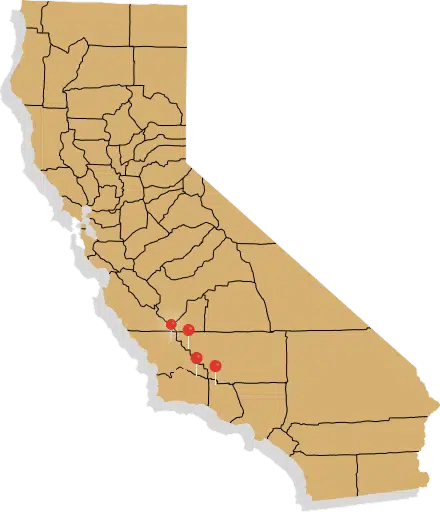
Consultations are free and we handle premises liability cases under a No Recovery, No Fee agreement, so no attorney fee is owed unless we recover for you. We represent injured clients in Costa Mesa, Riverside, Rancho Cucamonga, Apple Valley, Victorville, and Bakersfield, and throughout Southern California. Se habla espanol.
Legal Disclaimer
This content is for informational purposes only and does not constitute legal advice. The outcome of any case depends on its specific facts and circumstances. Past results do not guarantee future outcomes. Contact The Accident Network Law Group for advice about your individual situation.