CALL US NOW
 EMAIL US NOW

California pedestrians have legal rights, but they also have legal responsibilities on public roads. Breaking pedestrian traffic laws can affect your injury claim under California’s pure comparative negligence system. But it generally does not end your right to compensation if a driver’s negligence contributed to the accident. Knowing the rules pedestrians must follow helps you judge your situation and the strength of your claim. Attorney Damoun Yazdi at The Accident Network Law Group represents pedestrian accident victims throughout Southern California.
Key Takeaways
- California pedestrians must yield to vehicles when crossing outside of crosswalks under CVC Section 21954
- Pedestrians must obey pedestrian signals at controlled intersections under CVC Section 21456
- California’s Freedom to Walk Act, AB 2147 (effective January 1, 2023), limited jaywalking enforcement, but crossing outside a crosswalk when it is not safe to do so remains unlawful
- Pedestrian fault reduces but does not eliminate injury compensation under California’s pure comparative negligence standard
- Even a pedestrian who violated a traffic law can recover damages if the driver also acted negligently
Rules for Crossing at Intersections
At signalized intersections, California Vehicle Code Section 21456 requires pedestrians to obey pedestrian signals. A pedestrian who enters the crosswalk on a steady “Don’t Walk” or raised hand signal is crossing unlawfully. However, a pedestrian who begins crossing on a walk signal and the signal changes before they complete the crossing may continue to the other side at a safe pace.
At unsignalized intersections (with stop signs but no pedestrian signals), pedestrians in the crosswalk have the right of way. Drivers must yield.
At unmarked crosswalks (any intersection where two roads meet, even without painted lines or signals), pedestrians in the crosswalk have the right of way under CVC Section 21950. Drivers must yield.
Rules for Crossing Outside of Crosswalks
California Vehicle Code Section 21954 requires pedestrians crossing a roadway outside of a crosswalk to yield the right of way to all vehicles that are close enough to constitute an immediate hazard. This is what is commonly called “jaywalking” (crossing in the middle of a block or at a location other than a crosswalk).
California’s Freedom to Walk Act, AB 2147 (effective January 1, 2023), made it unlawful for law enforcement to cite pedestrians for jaywalking unless the crossing created an immediate danger of collision. However, this does not make crossing outside a crosswalk legal or safe. It only limits enforcement. Pedestrians who cross unsafely outside a crosswalk may still bear partial fault in civil injury cases.
CVC Section 21955 prohibits pedestrians from crossing between adjacent intersections controlled by traffic control signals or by police officers, meaning crossing in the middle of a block when there are signalized intersections at both ends of the block.
Sidewalk and Roadway Rules
CVC Section 21960 authorizes Caltrans and local authorities to prohibit or restrict pedestrians from walking on freeways and other limited-access highways, with an exception allowing the occupants of a disabled vehicle to walk to the nearest exit. Separately, CVC Section 21950 makes clear that a pedestrian’s right of way in a crosswalk does not excuse unsafe conduct: a pedestrian may not suddenly leave a curb or other place of safety and walk or run into the path of a vehicle so close the driver cannot safely stop, and may not unnecessarily stop or delay traffic while in a crosswalk.
How Pedestrian Fault Affects Your Injury Claim
California follows pure comparative negligence (Li v. Yellow Cab Co., 1975). If a pedestrian is found partially at fault for an accident, their recovery is reduced by their percentage of responsibility, but not eliminated.
For example, if a pedestrian crosses outside a crosswalk (a CVC Section 21954 violation) but the driver was also speeding (a CVC Section 22350 violation), both parties bear fault. If the pedestrian is found 30% at fault and the driver 70% at fault, and the pedestrian’s damages are $100,000, they recover $70,000.
Even pedestrians who bear majority fault can recover the remaining percentage of their damages. Attorney Yazdi works to minimize the fault attributed to his pedestrian accident clients by presenting evidence of the driver’s speed, distraction, or other violations.
California Laws Relevant to Pedestrian Accident Claims
California Vehicle Code Sections 21950 through 21960 govern pedestrian rights and responsibilities. California Code of Civil Procedure Section 335.1 sets a two-year statute of limitations for personal injury claims. California follows pure comparative negligence under Li v. Yellow Cab Co. (1975) 13 Cal.3d 804. California Vehicle Code Section 16056, amended by SB 1107 effective January 1, 2025, sets minimum auto insurance at $30,000/$60,000/$15,000.
Sharon Sampson
Contact The Accident Network Law Group About Your Pedestrian Accident Claim
If a driver hit you while you were on foot, even if you were not in a marked crosswalk at the time, you may still have a strong claim under California’s pure comparative negligence rule. Attorney Damoun Yazdi and the team at The Accident Network Law Group look at the full picture, including the driver’s speed, attention, and any traffic violations, to minimize the fault attributed to you and maximize your recovery. Consultations are free, our fee is contingent on winning your case, and Attorney Yazdi brings 12+ years of experience to every pedestrian accident claim.
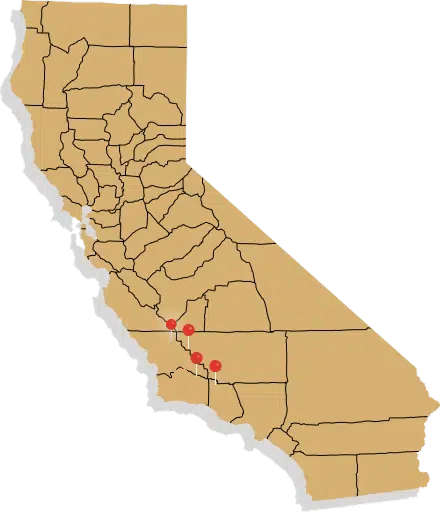
We represent pedestrian accident victims in Costa Mesa, Riverside, Rancho Cucamonga, Apple Valley, Victorville, and Bakersfield, and throughout Southern California. Se habla espanol.
Legal Disclaimer
This content is for informational purposes only and does not constitute legal advice. The outcome of any case depends on its specific facts and circumstances. Past results do not guarantee future outcomes. Contact The Accident Network Law Group for advice about your individual situation.