CALL US NOW
 EMAIL US NOW

A premises liability attorney can help you recover compensation for any injury caused by an owner’s failure to keep a property safe. California Civil Code Section 1714 says property owners owe a duty of ordinary care to everyone who enters. If they breach that duty and someone is hurt, the owner is liable for the resulting damages. Attorney Damoun Yazdi at The Accident Network Law Group handles premises liability cases throughout Southern California.
Key Takeaways
- California Civil Code Section 1714 requires property owners to maintain their premises in a reasonably safe condition
- Common premises liability injuries include broken bones from falls, traumatic brain injuries, spinal injuries, and soft tissue damage
- You must prove the property owner knew or should have known about the hazardous condition and failed to address it
- Retail stores, restaurants, hotels, parking lots, apartment complexes, and public buildings are all subject to premises liability
- California’s two-year statute of limitations (CCP Section 335.1) applies, or six months for government property (Government Code Section 911.2)
Types of Premises Liability Accidents
Slip and fall accidents are the most common type of premises liability claim. Wet floors, spilled liquids, loose tiles, torn carpet, uneven surfaces, inadequate lighting, and ice or debris on walkways all create fall hazards. Grocery stores, restaurants, retail shops, and hotels are frequent locations for slip and fall accidents.
Trip and fall accidents result from uneven pavement, raised thresholds, broken stairs, unmarked steps, loose floorboards, and extension cords or other obstacles left in walkways.
Falling objects from improperly stacked merchandise, unsecured shelving, overhead storage, or construction debris cause serious injuries. Retail stores and warehouse environments are common locations.
Inadequate security injuries result from assaults, robberies, or other criminal acts on property where the owner failed to provide reasonable security measures. If a property owner knew about a pattern of criminal activity and failed to install cameras, improve lighting, or hire security, they may be liable for injuries from criminal acts under California negligent security law.
Swimming pool accidents include drowning and near-drowning, slip and fall injuries on wet pool decks, diving board injuries, and electrocution from faulty pool equipment. Property owners must comply with California swimming pool safety requirements, including fencing, gates, and alarms.
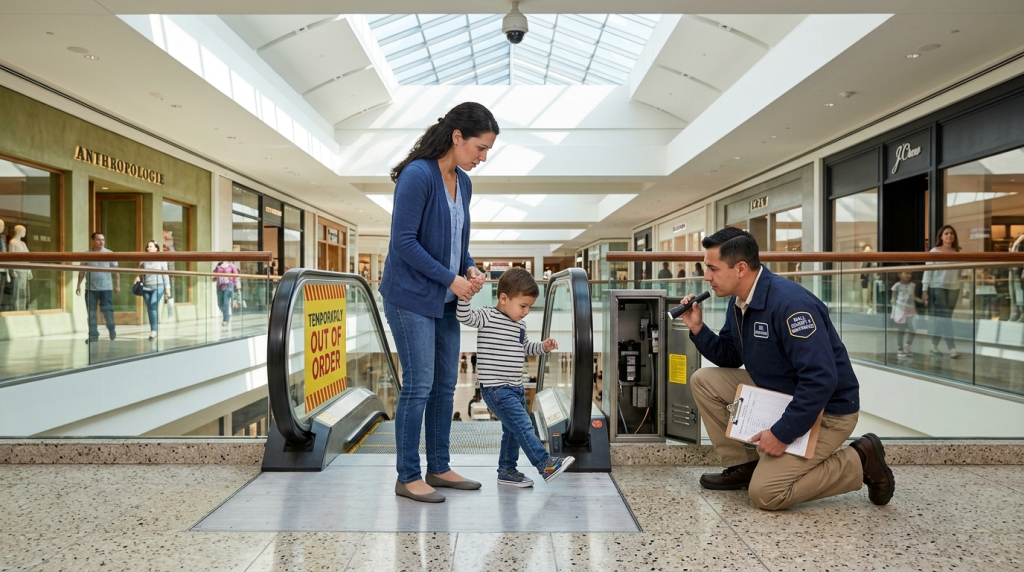
Elevator and escalator accidents result from mechanical failures, sudden stops, misaligned floors, and entrapment. Building owners are responsible for maintaining elevators and escalators in safe operating condition.
Dog bites on someone else’s property are also a form of premises liability claim. Under California Civil Code Section 3342, a dog owner is strictly liable for a bite that occurs in a public place or while the victim is lawfully on private property, regardless of whether the dog had ever bitten before or shown signs of aggression. The property owner may also be liable if they knowingly allowed a dangerous dog on their premises.
Common Injuries in Premises Liability Cases
Broken hips and fractures from falls are especially common among elderly victims. Hip fractures often require surgical repair (hip replacement or pinning) and extended rehabilitation. Falls are the leading cause of injury-related hospitalization among adults over 65.
Traumatic brain injuries can occur from striking the head on the ground, a wall, or an object during a fall. Even a seemingly minor fall can cause a concussion with lasting symptoms.
Spinal cord injuries can result from falls down stairs, falls from heights, or the impact of falling objects. These can cause herniated discs, vertebral fractures, or, in severe cases, paralysis.
Soft tissue injuries, including torn ligaments, sprains, strains, and contusions, may seem less serious than fractures or a TBI, but knee ligament tears and shoulder injuries often require surgery and months of rehabilitation.
Lacerations and puncture wounds can result from broken glass, exposed nails, sharp edges on fixtures, or other hazards.
Burns can result from hot liquids, faulty electrical equipment, or fire hazards on the property.
Proving a Premises Liability Claim
To recover compensation, you must establish each of the following:
- The property owner owed you a duty of care (they did if you were lawfully on the property)
- The property owner knew or should have known about the hazardous condition
- The property owner failed to repair the hazard or warn visitors
- The hazardous condition caused your injury
The “knew or should have known” element is often the most contested. Your attorney must demonstrate that the hazard existed long enough that a reasonable property owner would have discovered and addressed it, or that the property owner actually knew about the condition and failed to act. Evidence such as maintenance logs, prior incident reports, employee testimony, and surveillance footage can establish this element.
Attorney Damoun Yazdi began his career as a paralegal at a personal injury firm, where he learned that premises liability claims require swift investigation because property owners often repair hazardous conditions quickly after an accident, destroying the evidence. His approach includes documenting the hazard condition immediately, obtaining surveillance footage before it is overwritten, interviewing employees and witnesses, and reviewing the property’s maintenance and inspection records.
California Laws Affecting Premises Liability
California Civil Code Section 1714 establishes the duty of ordinary care. California Code of Civil Procedure Section 335.1 sets the two-year statute of limitations. Government Code Section 911.2 requires a six-month tort claim for government-owned property. California follows pure comparative negligence (Li v. Yellow Cab Co., 1975), meaning a property owner cannot escape all liability simply by showing you were also careless.
Nuria Siliezar
Contact The Accident Network Law Group About Your Premises Liability Claim
If a hazardous condition on someone else’s property left you injured, The Accident Network Law Group can evaluate your claim at no cost. Attorney Yazdi, who has 12+ years of personal injury experience and previously served as a law clerk at the Los Angeles County District Attorney’s Office, moves quickly to document the hazard, secure surveillance footage before it is overwritten, and pull maintenance and inspection records before a property owner can argue the condition had already been fixed. We represent premises liability victims on a contingency fee basis, so you owe nothing unless we recover for you.
Our team serves clients in Costa Mesa, Riverside, Rancho Cucamonga, Apple Valley, Victorville, and Bakersfield, and throughout Southern California. Se habla espanol. Reach out today to get your case reviewed.