CALL US NOW
 EMAIL US NOW

The right of way is the legal right of one road user to go before another in a particular traffic situation. The California Vehicle Code sets right-of-way rules for intersections, crosswalks, highways, and other traffic scenarios. If a driver, cyclist, or pedestrian violates another person’s right of way and causes an accident, that can be strong evidence of negligence in a personal injury claim. Attorney Damoun Yazdi at The Accident Network Law Group represents accident victims hurt by right-of-way violations. He serves clients throughout Southern California.
Key Takeaways
- California Vehicle Code Sections 21800 through 21809 govern right-of-way rules at intersections
- Pedestrians have the right of way in marked and unmarked crosswalks under CVC Section 21950
- Violating another person’s right of way creates a presumption of negligence in a personal injury case
- Emergency vehicles with activated sirens and lights have the right of way over all other traffic (CVC Section 21806)
- Even when you have the right of way, California law requires you to exercise due care to avoid collisions
Right-of-Way Rules at Intersections
California Vehicle Code Section 21800 establishes the fundamental rules. At an intersection controlled by stop signs or yield signs, the driver who arrives first and comes to a complete stop generally has the right of way once it is safe to proceed.
At uncontrolled intersections (no stop signs, traffic signals, or yield signs), the driver on the right has the right of way under CVC Section 21800(b). Despite this clear rule, uncontrolled intersections are frequent accident locations because drivers often fail to recognize them or assume they have priority.
At four-way stops, CVC Section 21803 requires every driver to come to a complete stop. When two vehicles stop at the same time, CVC Section 21800(c) governs priority: the vehicle on the right proceeds first. Confusion at four-way stops is a leading cause of intersection collisions in residential areas.
Left-turn right of way is governed by CVC Section 21801. A driver making a left turn must yield to all vehicles approaching from the opposite direction that are close enough to constitute a hazard. Left-turn accidents are among the most common intersection collisions because drivers misjudge the speed of oncoming traffic.
Pedestrian Right of Way
Pedestrians have specific right-of-way protections under California law that drivers must respect.
CVC Section 21950 requires drivers to yield the right of way to pedestrians in both marked crosswalks and unmarked crosswalks (any intersection where two roads meet, even without painted lines). This is one of the most frequently violated right-of-way rules. Drivers who fail to yield to pedestrians in crosswalks face both traffic citations and civil liability for any injuries they cause.
CVC Section 21954 addresses pedestrian duties outside of crosswalks. When crossing outside a crosswalk, pedestrians must yield the right of way to vehicles. However, this does not eliminate the driver’s duty to exercise due care to avoid hitting a pedestrian.
CVC Section 21955 makes crossing a roadway between two adjacent, signal-controlled intersections unlawful except in a crosswalk, though California’s Freedom to Walk Act, AB 2147 (effective January 1, 2023), bars a peace officer from stopping a pedestrian for this violation unless a reasonably careful person would recognize an immediate danger of collision with a moving vehicle.
Even when a pedestrian is not in a crosswalk or has crossed unlawfully, the driver has a duty to exercise reasonable care. Under California’s pure comparative negligence standard, a pedestrian who is partially at fault can still recover damages reduced by their percentage of fault.
Right of Way on Highways and Freeways
CVC Section 21804 requires a driver entering or crossing a highway from any public or private property, or from an alley, to yield to traffic already on the highway close enough to constitute an immediate hazard. Attorneys commonly apply this rule to freeway on-ramp merging as well, since an on-ramp is public roadway entering the highway; failure to yield when merging is a common cause of side-impact and rear-end collisions.
CVC Section 21802 addresses yield signs specifically. A driver approaching a yield sign must slow down and yield the right of way to any vehicle in the intersection or approaching closely enough to be a hazard.
CVC Section 21803 requires drivers at stop signs to stop completely and then yield to cross traffic that constitutes an immediate hazard.
On freeways, the right of way is governed by the merging rules above. However, California courts have also recognized that freeway drivers have a duty to make reasonable adjustments to allow merging traffic when it is safe to do so.
Emergency Vehicle Right of Way
CVC Section 21806 requires all drivers to yield the right of way and immediately drive to the right-hand edge or curb, clear of any intersection, and stop when an emergency vehicle approaches with an activated siren and visible red light. This applies to fire trucks, ambulances, police vehicles, and other authorized emergency vehicles.
Failure to yield to an emergency vehicle is both a traffic violation and potential grounds for civil liability if the failure causes an accident. Accidents involving emergency vehicles can be complex because governmental immunity may apply, and Government Code Section 911.2 requires a tort claim within six months.
Bicycle Right of Way
Cyclists in California have the same rights and are subject to the same duties as motor vehicle drivers under CVC Section 21200. This means cyclists have the right of way in the same situations where a car would, including at intersections and on roadways, though a narrower set of Vehicle Code sections applies to cyclists riding on a dedicated Class I bikeway.
CVC Section 21760 (the Three Feet for Safety Act) requires drivers to maintain at least three feet of clearance when passing a cyclist, or to slow to a safe speed and pass only when it can be done safely if three feet is not available. Violating this law and causing injury to a cyclist creates strong evidence of negligence.
How Right-of-Way Violations Affect Your Personal Injury Case
When a driver violates another person’s right of way, California courts may apply the doctrine of negligence per se. Under this doctrine, violating a statute designed to protect a class of people (like traffic laws protecting road users) creates a presumption that the violator was negligent. The injured person does not need to separately prove that the driver failed to exercise reasonable care; the traffic violation itself establishes the breach of duty.
This does not make liability automatic. The at-fault party can still argue that the violation was not the cause of the accident or that the injured party shares fault. California’s pure comparative negligence standard (Li v. Yellow Cab Co., 1975) means fault can be apportioned between multiple parties.
Attorney Damoun Yazdi, who began his career as a paralegal and later served as a law clerk at the Los Angeles County District Attorney’s Office, uses traffic code violations, police reports, witness statements, and accident reconstruction evidence to establish right-of-way violations in his clients’ cases. When the evidence clearly shows the other party violated your right of way, it can significantly strengthen your negotiating position with the insurance company.
California Vehicle Code Section 16056 (amended by SB 1107, effective January 1, 2025) requires minimum auto insurance of $30,000/$60,000/$15,000. Accidents caused by right-of-way violations that result in serious injuries often produce damages exceeding these minimums.
Aryan Rahpeik
Professional service with Damoun Yazdi at the Riverside location Highly recommended
Contact The Accident Network Law Group About Your Right-of-Way Accident Claim
If you were injured in an accident caused by a right-of-way violation, The Accident Network Law Group can evaluate your case in a free consultation. We work on a contingency basis: you pay nothing unless we recover compensation for you.
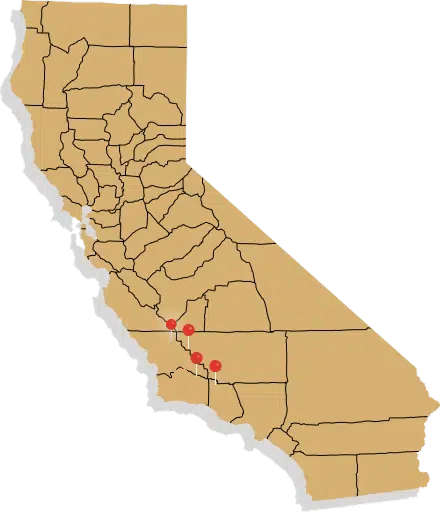
Our team serves clients in Costa Mesa, Riverside, Rancho Cucamonga, Apple Valley, Victorville, and Bakersfield, and throughout Southern California. Se habla espanol. Call today.
Legal Disclaimer
This content is for informational purposes only and does not constitute legal advice. The outcome of any case depends on its specific facts and circumstances. Past results do not guarantee future outcomes. Contact The Accident Network Law Group for advice about your individual situation.